Article/ Perspective
GEO Optimization and Accessibility
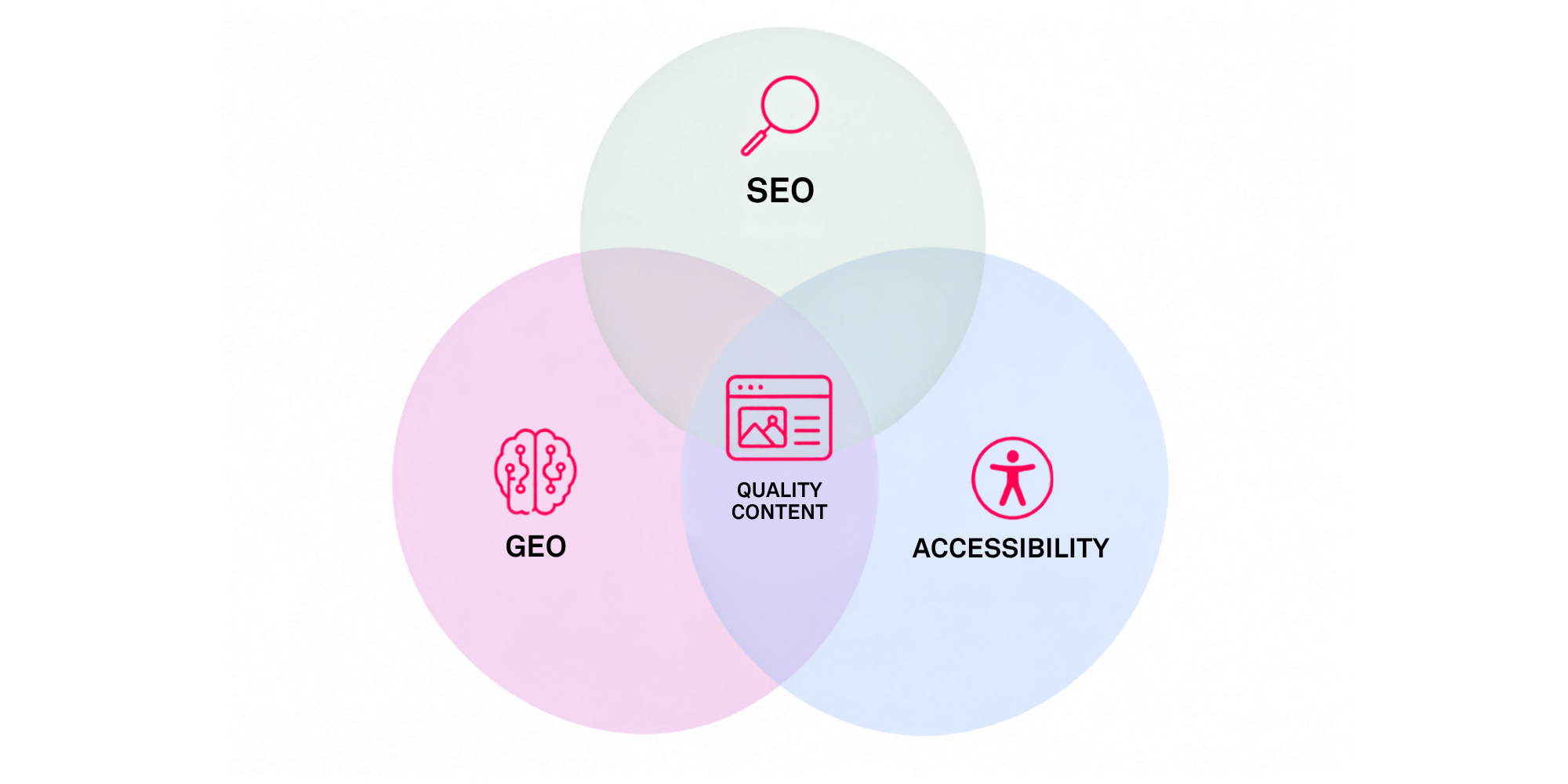
What helps people also helps AI
The principles of digital accessibility and AI search optimization have more in common than it may seem at first glance. By following key accessibility principles (especially understandability and robustness), we make content easier for AI models to process. Accessible content is easier to understand for everyone – both people and artificial intelligence.
Search is changing
SEO experts once joked: “Where is the best place to hide a body? On the second page of Google search results.” The message is clear: users rarely look beyond the first few results. Today, as more and more people search for answers directly through artificial intelligence models, the joke could perhaps be updated (or at least expanded): “On a website that AI cannot understand.” And this is where GEO comes in.
What exactly is GEO or AI SEO?
GEO (Generative Engine Optimization), also known as AI SEO (Artificial Intelligence Search Engine Optimization), is the process of preparing web content so that AI systems can properly understand it, recognize it as trustworthy, and use it when generating responses.
While traditional Google keyword searches provide links to different websites where users then find the information themselves, asking a specific question in an AI model (ChatGPT, Google AI Overviews, Perplexity, Gemini, etc.) provides an immediate and structured answer without requiring a website visit.
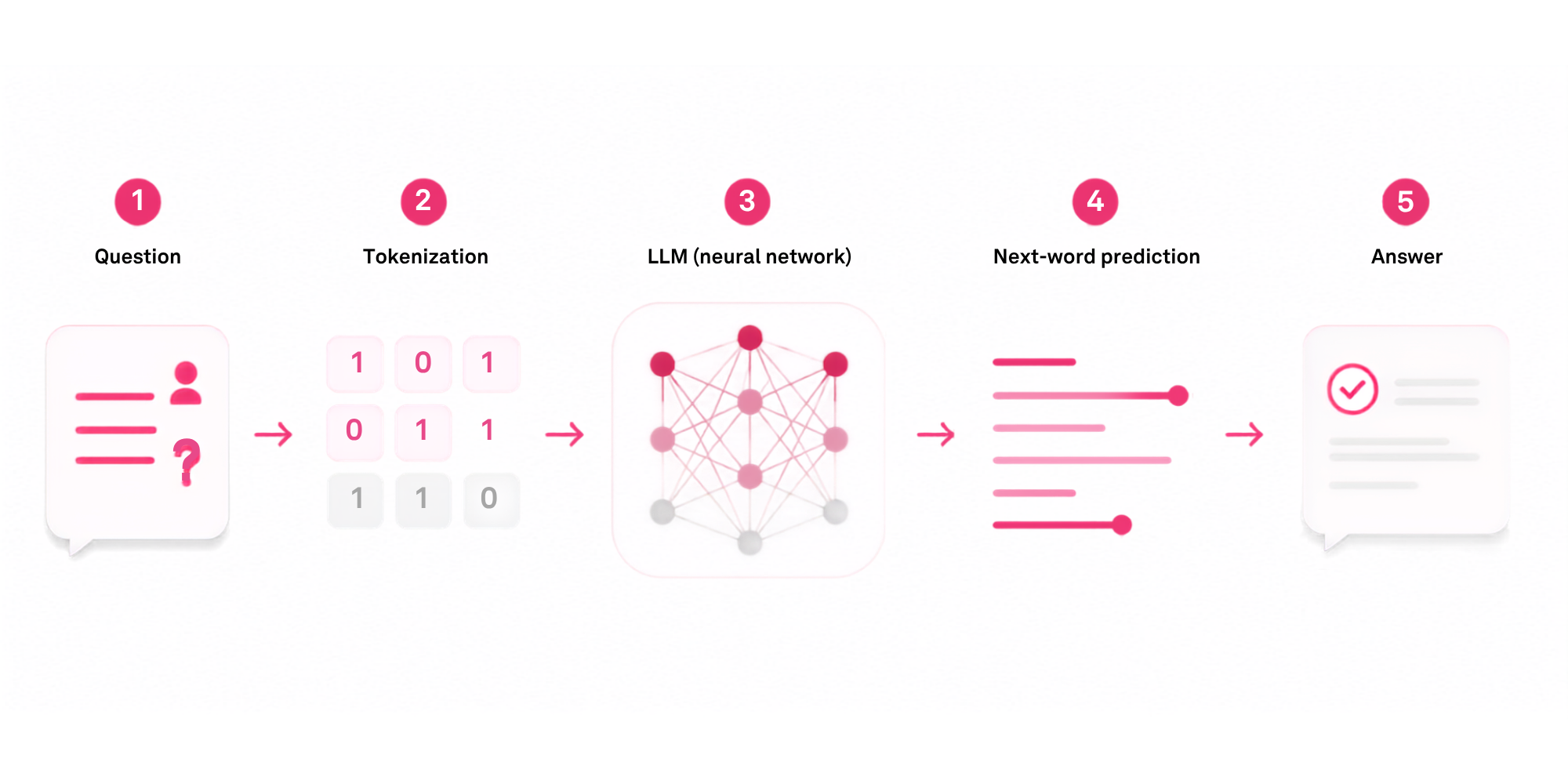
A brand’s visibility in search results no longer depends solely on optimizing content for search engines (SEO). Increasingly important is how well LLMs (large language models) understand its content and, above all, its value for users.
No GEO without SEO
Although the rapid growth of artificial intelligence has brought increasing attention to GEO optimization, this does not mean that SEO can be forgotten. High-quality search engine optimization remains the foundation of digital visibility.
AI systems often gather information from publicly available websites of companies and brands. High-quality content, clear structure, strong semantics, and trustworthy sources are important for both search engines and AI systems.
SEO ensures that search engines understand content, index websites, and build authority – all of which provide the foundation from which AI models retrieve information. GEO therefore does not replace SEO; instead, it naturally builds upon and extends it.
Today, success is no longer measured solely by website traffic. What is becoming increasingly important is how often AI mentions a brand, how frequently it cites its content, and how much influence we have over this process.
Content must be accessible first
Alongside optimizing for search engines and AI systems, accessibility is an important aspect of high-quality websites. While SEO focuses on improving visibility in search engines and GEO on increasing visibility in AI-generated responses, digital accessibility ensures that web content is understandable and usable for the widest possible range of users. This means adapting content for people with different disabilities (e.g., people who are blind, visually impaired, mobility impaired, or deaf).
Web accessibility is more than just a technical or legal requirement – it is a foundation of an inclusive digital society. Although it is a separate area of website development, it is becoming increasingly clear that many accessibility principles also benefit artificial intelligence systems.

SEO helps users find content, GEO increases the likelihood that AI will use it, and accessibility ensures that it is available to everyone.
How accessibility supports GEO
Because AI can more easily process content that is well-structured and machine-readable, many GEO principles overlap with the principles of digital accessibility. Semantic HTML, a logical heading hierarchy, alternative (alt) text for images, clear navigation and page structure, and understandable language are among the most obvious examples.
Improving accessibility therefore benefits not only users but can also increase the likelihood that content will be recognized and used by artificial intelligence, thereby improving brand visibility.
To conclude, it is important to emphasize that no optimization can replace high-quality content that provides value to users and is built on real experience, expertise, and originality. Such content is what users will search for, search engines will highlight, and artificial intelligence systems will recognize as a trustworthy source.
If you need help with SEO, GEO, or with improving the accessibility of your website, contact us at info@innovatif.com. Our experts will be happy to help.